Overview
A middle ear infection affects the space behind the eardrum. It can occur after an upper respiratory tract infection, particularly in children. Active infection and fluid remaining after an infection are not the same condition.
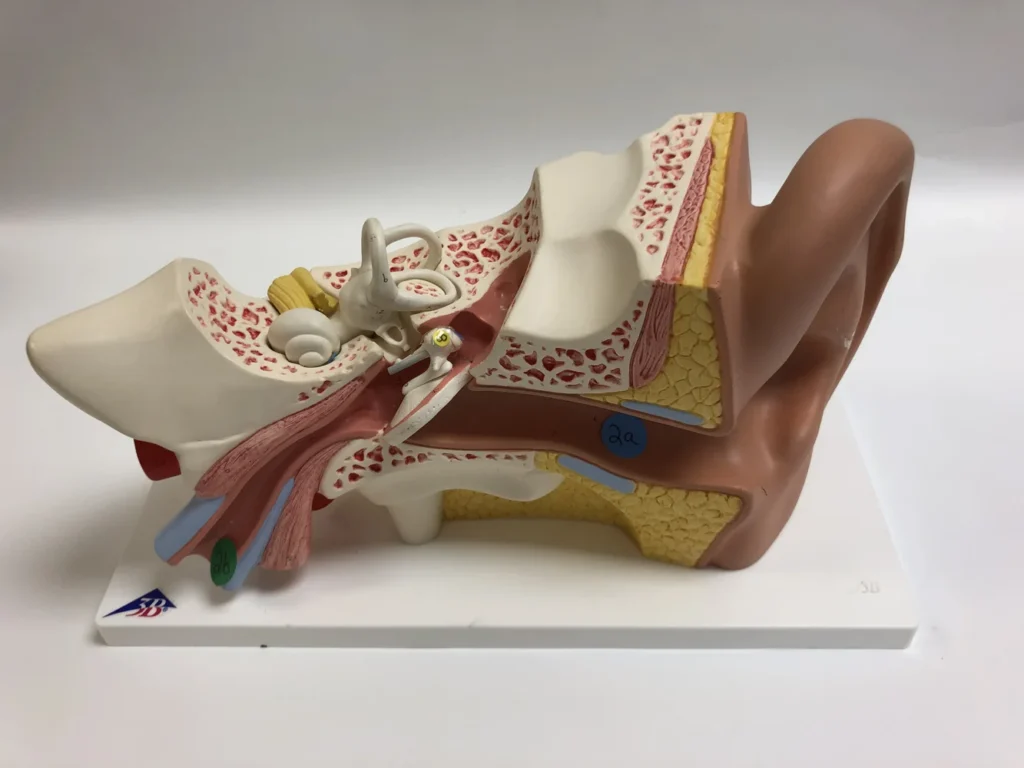
The middle ear is a space behind the eardrum containing the tiny bones involved in transmitting sound. When ventilation of this space is impaired, fluid can build up more easily. Acute infection, fluid accumulation without infection and recurrent episodes need to be distinguished: although the symptoms may look similar, monitoring and treatment decisions differ. Temporary hearing loss, especially in children, may attract less attention than pain and may be noticed as a change in behaviour.
When should you seek assessment?
Ear pain and fever
Reduced hearing
Irritability and disturbed sleep in children
A child moving closer to the television, frequently asking for things to be repeated or missing what is said in class may be experiencing hearing difficulties. These observations alone do not diagnose a middle ear infection, but should be discussed during examination. Changes in feeding and sleep patterns are also part of an infant’s history. In adults, the cause of persistent or one-sided fluid accumulation may require further investigation. Assessment should not be delayed if there is swelling behind the ear, a marked decline in general well-being, a new change in facial movement or worsening symptoms.
Examination and assessment
The eardrum is assessed with an otoscope. Tympanometry may help when fluid is suspected, and audiological tests may help with persistent hearing symptoms. Age, fever and general condition are considered together.
The clinician examines the appearance of the eardrum and, when necessary, its movement. Redness alone does not determine the entire decision; other features of the eardrum, the duration of pain and the person’s general condition are assessed together. Tympanometry provides information about middle ear ventilation, while hearing tests help establish the significance of hearing loss for daily functioning. Knowing the dates of previous episodes, treatments used and intervals of recovery makes it possible to assess reports of frequent recurrence more precisely.
Treatment options
Pain relief, monitoring or antibiotics where necessary are selected. Not every earache requires antibiotics; the need for ear tubes is assessed separately in recurrent cases.
A recommendation to monitor the condition does not mean the problem is unimportant. The expected time to improvement, how to manage pain and which changes warrant further contact should be explained. The need for antibiotics depends on age, examination findings and the severity of the condition. Restarting antibiotics from a previous prescription or using another child’s medicine is inappropriate. For persistent fluid, procedures such as ear tubes are considered only after hearing, duration, development and other risks have been assessed together.
Recovery and follow-up
Middle ear fluid may persist for a while after pain resolves. Follow-up should not be postponed if hearing and language development are affected.
Pain may resolve before the middle ear is fully ventilated again. Recommended follow-up therefore matters if hearing symptoms persist, even when the child appears more comfortable. Observations from nursery or school can provide families with additional information; it may help to let the teacher know that there could be a temporary hearing problem. Preventable factors such as exposure to cigarette smoke can be discussed during the consultation. In recurrent cases, the aim is to reduce the overall impact on hearing and development as well as to treat each episode.
One of the most useful pieces of information families can provide at follow-up is how far the child has returned to their usual self. Observations about feeding, sleep, participation in play and responses to sounds can be shared at the follow-up consultation. They add everyday context to examination findings rather than establish a diagnosis. Having several children at home does not mean the same medicine is suitable for all of them. It is important not to confuse whom a prescription belongs to, how long it should be used or when follow-up is due. When ear pain recurs, the new examination findings may differ from those of the previous episode. If symptoms worsen, fluid intake falls markedly or the child’s general condition deteriorates, an earlier health assessment should be sought rather than waiting for the scheduled appointment. Observations and questions about hearing should also be included in the follow-up discussion.
Frequently asked questions
Does hearing recover immediately when the infection clears?
Recovery may be delayed if fluid remains. Persistent symptoms require another examination and a hearing test.
How can I prepare for the consultation?
Note when your symptoms began and any previous tests or procedures. Bring a list of your medicines and any earlier test results you have. You can share your expectations and questions during the consultation.
Is examination still needed if pain improves when ear discharge begins?
Yes. It is necessary to assess whether the discharge comes from the outer ear or through an opening in the eardrum. Less pain may not mean that the problem has fully resolved. Do not apply unselected drops or other substances to the ear; fever and changes in general condition, particularly in children, should also be reported to the healthcare team.
What questions should I ask when comparing treatment options?
Ask about the main aim of the proposed approach, which symptoms it is expected to help and which problems it may not change. Find out whether monitoring or a different treatment is an option, and what the possible consequences of waiting are in your situation. If the plan includes a procedure, the preparation, follow-up, return to daily life and service to contact if something unexpected happens should be clear. Stating your most important expectation at the start of the consultation makes it easier to compare options against the same goal. It is natural to ask for an unfamiliar medical term to be explained; the decision should be based on the benefits and limitations described to you, as well as the name of the procedure.
Scientific source and further reading
English translation of the Turkish information summary · Source language: English · Content date: September 2026. This guide does not replace personal medical advice or an examination.