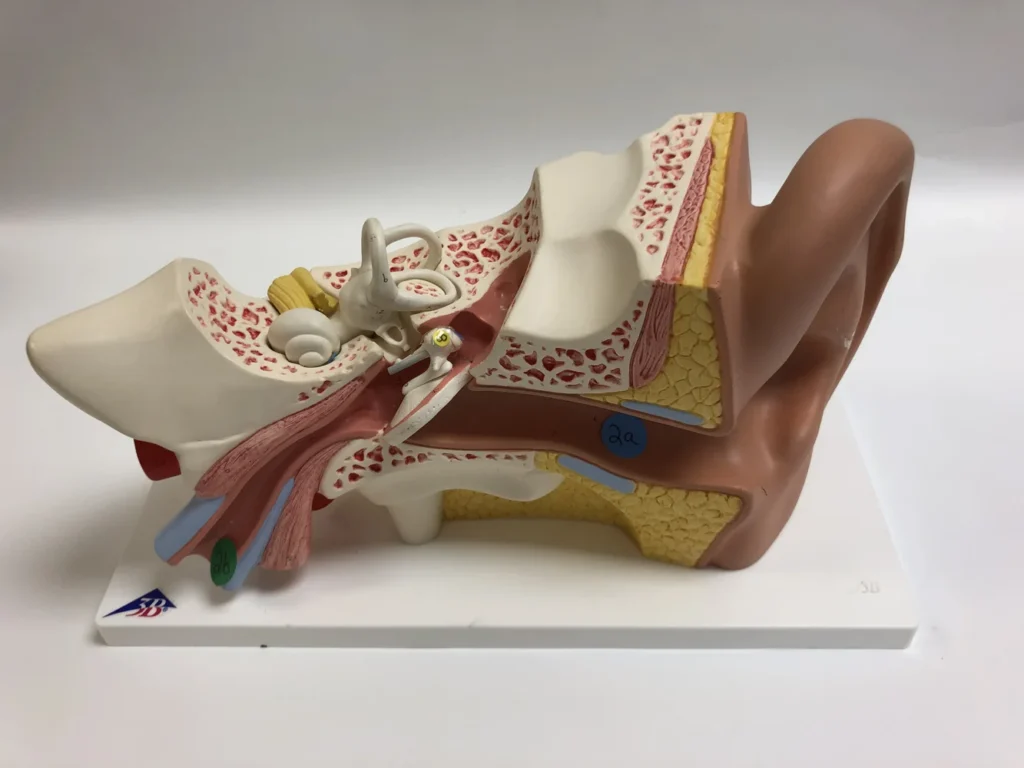

Overview
Otosclerosis can restrict movement, particularly of the stapes bone. Sound becomes harder to transmit to the inner ear; some people also have inner ear involvement. A normal-looking eardrum does not mean hearing is normal.
Movement of the tiny middle ear bones is as important to sound transmission as the eardrum. In otosclerosis, restricted movement can cause hearing loss in an ear that looks healthy on examination. The extent and course vary between people, and one ear need not be affected to the same degree as the other. Some people have impaired sound conduction alone, while others also have affected inner ear function. This distinction matters when determining the expected benefit of treatment.
When should you seek assessment?
Gradually progressive hearing loss
Tinnitus
A family history of similar hearing problems
Needing speech to be louder, struggling on the telephone or noticing tinnitus may draw attention to the problem in daily life. Slow progression may allow the person to adapt and delay seeking help. The duration of symptoms, a family history of a similar condition and previous hearing tests contribute to assessment. A sudden change should not automatically be attributed to known otosclerosis; it should be treated as a new development.
Examination and assessment
Audiometry and middle ear tests show the type of hearing loss. Imaging is used when necessary. Other problems of the small ear bones are considered in the differential diagnosis.
Hearing thresholds measured through air and bone conduction are assessed together. Their difference helps establish the contribution of impaired sound transmission. Speech discrimination and middle ear tests are also part of the decision. The clinician explains whether imaging is needed to answer a specific question. Summarising a test result only as a percentage of hearing loss is not always enough to understand why different treatments are suggested. Mention any similar hearing problems in your family, while recognising that family history alone does not establish a diagnosis. Comparing earlier hearing tests in date order makes it easier to discuss when changes occurred.
Treatment options
A hearing aid or, for suitable individuals, stapes surgery may be an option. The choice depends on hearing level, inner ear function, general health and personal preference.
A hearing aid provides support without surgery; having a surgical assessment does not mean that a hearing aid will not work. In suitable cases, stapes surgery may be considered to support the role of the stapes in sound transmission. The operation, technique and personal risks are explained during examination. If inner ear function is also impaired, the possible gain from surgery may differ. The decision should consider communication needs, attitudes to risk and access to follow-up alongside the test results.
Recovery and follow-up
Hearing is monitored at intervals. If surgery is considered, the risks of dizziness, altered taste and hearing loss are discussed in detail.
If surgery is planned, information is provided about early changes in balance, taste and hearing. The surgical plan determines when hearing will be measured and which activities require restriction. For people choosing a hearing aid, appropriate adjustment and regular hearing follow-up matter. Whichever path is chosen, the result is not assessed solely by how hearing feels during the first few days. Seek advice without waiting for the scheduled appointment if a new or substantially worse symptom develops.
When surgery is discussed, the possibilities that hearing may not improve, may change again over time or may rarely worsen should be addressed clearly. Tinnitus also cannot be guaranteed to change in the same direction as hearing. This information is intended to establish realistic expectations, rather than direct someone towards a particular option. Bringing earlier tests and describing the most difficult communication situations is helpful. If both ears are affected, which ear to address first is assessed separately. Obtain individual advice about travel, strenuous exercise and activities involving pressure changes during the early period after surgery. A single recovery timetable found online may not suit everyone’s procedure or daily circumstances. The follow-up plan can be kept in writing.
Frequently asked questions
Does a diagnosis of otosclerosis always require surgery?
No. Rehabilitation with a hearing aid is also an option; the decision follows individual assessment.
How can I prepare for the consultation?
Note when your symptoms began and any previous tests or procedures. Bring a list of your medicines and any earlier test results you have. You can share your expectations and questions during the consultation.
Will surgery mean I never need a hearing aid?
This outcome cannot be guaranteed. Surgery aims to correct a particular problem in sound transmission; inner ear function and changes over time affect the result. Some people may still need hearing support later. Before surgery, the intended gain and possible limitations should be discussed using the hearing tests.
What questions should I ask when comparing treatment options?
Ask about the main aim of the proposed approach, which symptoms it is expected to help and which problems it may not change. Find out whether monitoring or a different treatment is an option, and what the possible consequences of waiting are in your situation. If the plan includes a procedure, the preparation, follow-up, return to daily life and service to contact if something unexpected happens should be clear. Stating your most important expectation at the start of the consultation makes it easier to compare options against the same goal. It is natural to ask for an unfamiliar medical term to be explained; the decision should be based on the benefits and limitations described to you, as well as the name of the procedure.
Scientific source and further reading
English translation of the Turkish information summary · Source language: English · Content date: September 2026. This guide does not replace personal medical advice or an examination.