Overview
Ear reshaping covers different procedures affecting the outer ear. Prominence, shape irregularities and earlobe problems are not treated by the same surgery. These procedures differ from operations treating hearing loss.
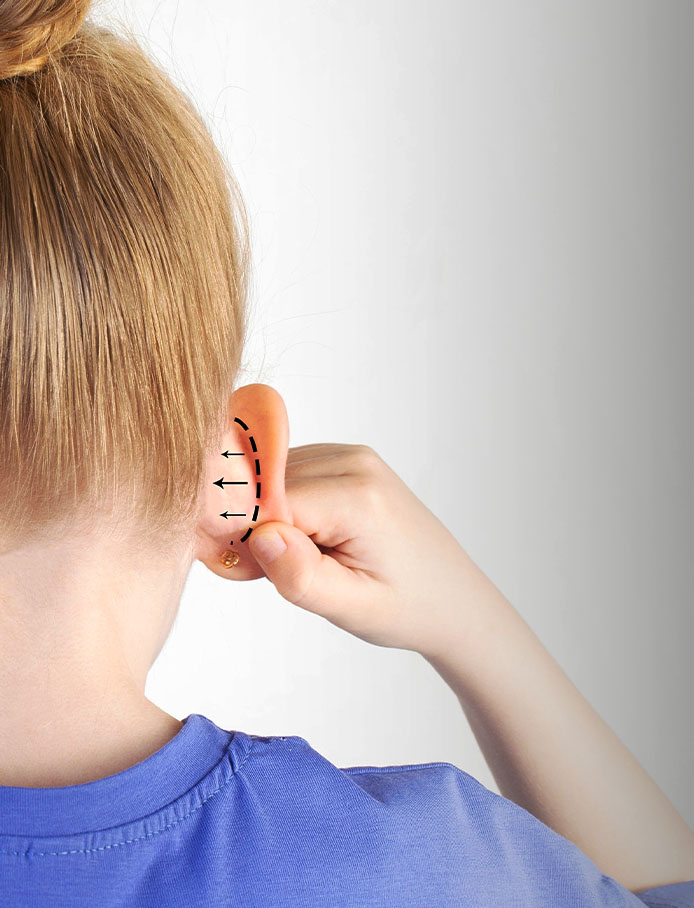
Ear aesthetics is a broad field assessing outer ear shape, size and relationship to the head. Prominence, congenital differences, trauma or changes after treatment may require different plans. An appearance intervention is different from hearing treatment. Describe the feature that bothers you and your expectations. Natural side differences and proportion with the face are considered together; no single ideal ear shape exists.
When should you seek assessment?
Expectations about the ear-head angle
Differences in outer ear shape
Earlobe deformity
An outward-looking ear, a poorly defined fold or an earlobe change may prompt consultation. State duration and earlier interventions. Report hearing symptoms, discharge or pain separately. Hairstyle and camera angle can affect perception. Identifying the feature with greatest impact helps prevent all minor differences being treated as one problem.
Examination and assessment
Cartilage, skin, earlobe and facial proportion are assessed. A child’s age, development and own wishes are considered.
Examination considers cartilage, skin, folds, earlobes and the relationship between sides. Earlier surgery, piercing and trauma matter. Ask which area will be changed and how others will be preserved. For a child, wishes, feelings and participation in care should also be assessed. Decisions should not rest solely on family aesthetic concerns. Scope and expected symmetry should be clearly discussed from examination findings.
Treatment options
Cartilage reshaping, suture techniques or earlobe repair may be planned according to need. Completely identical ears cannot be guaranteed.
Reshaping, suture adjustment and earlobe repair address different needs. Method and anaesthesia are selected individually. Discuss bleeding, infection, scars, asymmetry, suture problems and further intervention. Placing ears completely flat against the head is not a balanced goal. Consider no procedure too; appearance difference alone should not be presented as a health problem that must be corrected.
Recovery and follow-up
Bandaging and protection advice are given. Scarring, infection, asymmetry and return of the original shape are assessed at follow-up.
Dressings, support bands and pressure protection vary with the procedure. Obtain individual advice about contact during sleep and with glasses or headphones. Do not pull or press the ear to check results while healing. Report increasing pain, marked swelling, discharge or unexpected changes. Return to everyday life and maturation of scars and tissues are different processes; final assessment belongs at an appropriate follow-up stage.
Discuss daily needs when deciding about ear appearance. Glasses, hearing aids, helmets and frequent headphone use can affect care; learn when they can be used. Disclose medicines and earlier healing problems, including raised scars after piercing. Carers should understand the same return-to-school and play-protection instructions. Avoid shaming a child about appearance and listen to feelings. Adult decisions should also rest on preference rather than pressure. Minor side differences can remain; complete equality is not guaranteed. Assess comfort and daily use alongside the initial goal at follow-up.
Frequently asked questions
Does ear reshaping improve hearing?
Cosmetic outer ear treatment does not correct hearing loss arising in the middle or inner ear.
How can I prepare for the consultation?
Note when your symptoms began and any previous tests or procedures. Bring a list of your medicines and any earlier test results you have. You can share your expectations and questions during the consultation.
Will ear aesthetics also correct hearing?
Cosmetic adjustment of the outer ear is not treatment for middle- or inner-ear hearing loss. State hearing problems separately so appropriate examination and tests can be planned. Location in the same region does not make the two goals identical. Distinguish the intended appearance change from how hearing expectations will be assessed.
What questions should I ask when comparing treatment options?
Ask about the main aim of the proposed approach, which symptoms it is expected to help and which problems it may not change. Find out whether monitoring or a different treatment is an option, and what the possible consequences of waiting are in your situation. If the plan includes a procedure, the preparation, follow-up, return to daily life and service to contact if something unexpected happens should be clear. Stating your most important expectation at the start of the consultation makes it easier to compare options against the same goal. It is natural to ask for an unfamiliar medical term to be explained; the decision should be based on the benefits and limitations described to you, as well as the name of the procedure.
Scientific source and further reading
English translation of the Turkish information summary · Source language: English · Content date: September 2026. This guide does not replace personal medical advice or an examination.
