
Overview
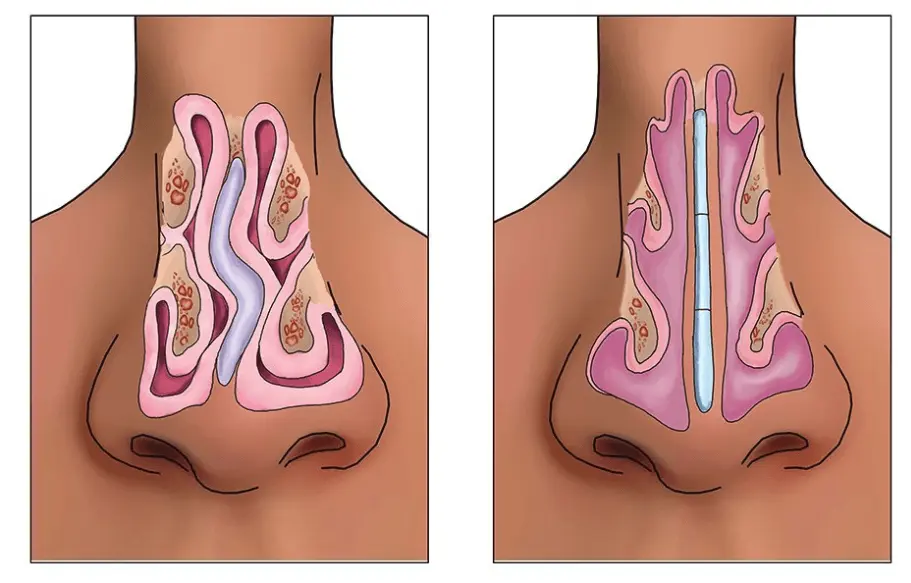
Nasal polyps are soft tissue growths associated with chronic inflammation. They are often bilateral; one-sided masses need separate investigation. Asthma and sensitivity to certain medicines may coexist.
Nasal polyps are soft tissue growths associated with the mucosa inside the nose and sinuses. They may affect everyday life through blockage and reduced smell. Surgery should be understood as more than removing visible tissue; long-term management of the associated inflammatory process is also discussed. The first consultation aims to identify the location and effects of polyps, assess the contribution of earlier treatments and clarify what surgery is expected to change in relation to your priorities.
When should you seek assessment?
Progressive blockage
Loss of smell
Nasal discharge and postnasal drip
Persistent blockage, postnasal drip and difficulty smelling are assessed. Describe when symptoms began, whether both sides are equally affected and the impact on sleep. Be sure to report asthma or a history of reactions to certain painkillers. Do not label every growth inside your nose as a polyp yourself; examination is especially important for one-sided symptoms following a different course. Everyday examples of changes in smell help ensure this goal is remembered during follow-up.
Examination and assessment
Endoscopic examination, necessary imaging and respiratory history are assessed. Suspicious tissue undergoes pathological examination.
Internal examination and endoscopy assess the presence and extent of polyps; CT is used when necessary. Treatment history, other respiratory symptoms and response to medicines are considered together. Share earlier operation and pathology reports if available. Ask separately what the plan aims to achieve for nasal openness, smell and recurrence. Recognising that results and follow-up frequency vary helps assess the process realistically. Explain whether smell changed during earlier treatment. Describing food smells, everyday environmental smells and nasal blockage through separate examples makes changes clearer at follow-up.
Treatment options
Nasal medicines are among the main options. If control is inadequate, endoscopic surgery may be considered; selected severe cases may be assessed for biological treatment.
Endoscopic surgery may be considered in suitable people whose condition is not adequately controlled with medicines. Removing polyps does not mean disease cannot return; care and medicines may continue. Other treatment options are assessed separately in certain circumstances. Surgical risks, expected benefits and follow-up needs should be discussed together. Learn why your treatment was chosen and when it will be reviewed instead of copying another patient’s medicine or duration of use.
Recovery and follow-up
Polyps can recur. Regular medicines and rinsing, asthma follow-up and endoscopic checks are important after surgery.
Symptoms may fluctuate early because of swelling and crusting. Changes in smell also vary between people; do not treat the early result as final. Endoscopic checks and recommended care are ongoing parts of treatment. Report side effects or application difficulties that make a medicine hard to use. Seek assessment without waiting for routine follow-up for significant bleeding, visual changes, increasing swelling around the eye or unusually severe pain.
Discussing the purpose of long-term follow-up at the first visit helps explain why checks remain necessary after surgery. If smell is reduced, consider home and workplace safety needs, such as difficulty noticing smoke or spoiled food. If another clinician monitors your asthma, treatment plans should be coordinated. Disclose all medicines and do not change them yourself. Do not regard recurrence as personal failure; examination and options may need reconsideration. At follow-up, describe blockage and smell separately. Writing down your most important preoperative expectation helps compare benefits more consistently at later visits.
Frequently asked questions
Does removing a polyp definitely end the disease?
No. A polyp is a sign of an inflammatory process that can continue; long-term follow-up is needed.
How can I prepare for the consultation?
Note when your symptoms began and any previous tests or procedures. Bring a list of your medicines and any earlier test results you have. You can share your expectations and questions during the consultation.
Does recurrence always require another operation?
Symptoms, examination findings and use of current treatment are assessed first. The next step differs between people; the medicine plan may need adjustment or other options may need discussion. Another surgical decision is not based only on time since the last operation. Bring previous reports and a treatment list to follow-up.
What questions should I ask when comparing treatment options?
Ask about the main aim of the proposed approach, which symptoms it is expected to help and which problems it may not change. Find out whether monitoring or a different treatment is an option, and what the possible consequences of waiting are in your situation. If the plan includes a procedure, the preparation, follow-up, return to daily life and service to contact if something unexpected happens should be clear. Stating your most important expectation at the start of the consultation makes it easier to compare options against the same goal. It is natural to ask for an unfamiliar medical term to be explained; the decision should be based on the benefits and limitations described to you, as well as the name of the procedure.
Scientific source and further reading
English translation of the Turkish information summary · Source language: English · Content date: September 2026. This guide does not replace personal medical advice or an examination.