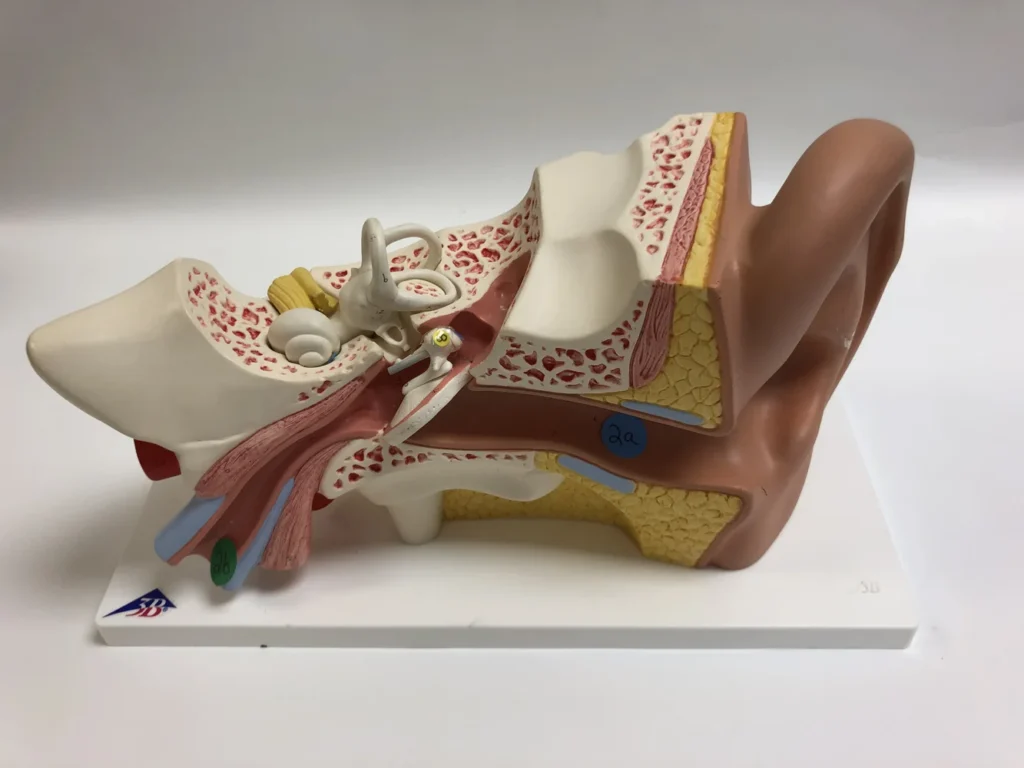

Overview
Presbycusis is a gradual reduction in hearing with age, usually affecting both ears. Understanding speech can become particularly difficult in busy environments. Noise exposure, certain illnesses and medicines can also affect hearing.
Because age-related hearing changes usually progress slowly, other people may notice them before the person affected does. Common experiences include thinking that someone is mumbling, missing higher-pitched sounds in particular, or becoming tired in situations where several people speak at once. The difficulty involves more than volume: making out words may also become harder. Accepting a change in hearing as a natural consequence of age that cannot be helped may delay consideration of support that could be useful.
When should you seek assessment?
Asking people to repeat themselves
Turning up the television volume
Difficulty distinguishing words in noisy environments
Hearing difficulties may be experienced differently in meetings, family conversations, on the telephone or while watching television. Identifying the three situations you find most difficult before your appointment helps relate the test results to everyday life. A relative’s observations can also be helpful, but do not replace your own experience. Hearing loss that develops rapidly, affects one side substantially more, or occurs with other new symptoms should not be attributed to age alone. These differences should be specifically mentioned during assessment.
Examination and assessment
After the ear canal and eardrum are examined, pure-tone and speech audiometry are performed. The everyday situations that present the greatest difficulty help guide assessment.
After additional, potentially correctable causes such as earwax have been investigated, hearing levels are measured at different frequencies. Speech tests help establish whether there is difficulty distinguishing words even when the volume increases. Medicines, prolonged noise exposure and family history are considered together. These tests should be viewed as an individual assessment showing what support would meet a real need, rather than as a formality for selling a device.
Treatment options
Hearing aids, assistive listening systems and communication strategies may be planned together. For advanced hearing loss, implant options may be considered following an assessment of suitability.
A hearing aid is not chosen solely by its model or size. The pattern of hearing loss, ability to distinguish speech, manual dexterity, use of glasses and daily habits all matter. Fitting and adjusting the device, discussing the trial experience and making further adjustments when necessary are part of the process. The same device cannot be expected to produce the same result for everyone. Assistive listening equipment or more advanced hearing rehabilitation options may also be discussed for suitable individuals; the reasons for recommending each option should be explained clearly.
Recovery and follow-up
Adapting to a hearing aid and adjusting its settings require follow-up. Family members can support communication by speaking clearly face to face and reducing background noise.
Family support involves more than continually speaking louder. Attracting the person’s attention before speaking, keeping your face visible and reducing background sound can make communication easier. Once hearing-aid use begins, noting which situations are easier and which remain difficult helps with adjustments. Daily device care, battery replacement or charging routines, and follow-up intervals should be understood. The aim is less about changing a number on a test sheet and more about supporting greater independence and comfort in communication.
It is helpful to define the expected benefits of hearing support before the consultation: possible goals include following family conversations more comfortably, feeling less tired during work meetings or communicating more clearly on the telephone. Discussing these goals at later appointments allows the actual experience of using the device to be assessed, as well as its sound. If the device causes discomfort, produces a whistling sound or makes your own voice sound different, you can request a fitting and adjustment check before setting it aside. New ear pain, discharge or a sudden change in hearing should not be regarded solely as a device-setting issue. Relatives who support clear communication, rather than blaming the person or excluding them from conversations, can also help establish a habit of daily use.
Frequently asked questions
Should I wait until my hearing loss is severe before using a hearing aid?
An assessment can be arranged when everyday communication is affected. The appropriate device and follow-up plan depend on the test results and your needs.
How can I prepare for the consultation?
Note when your symptoms began and any previous tests or procedures. Bring a list of your medicines and any earlier test results you have. You can share your expectations and questions during the consultation.
Could it still be age-related if my ears hear differently?
Age-related hearing loss often affects both ears; a marked difference between sides needs separate assessment. That difference alone does not establish a particular diagnosis. Earlier tests are compared if available, and additional investigations are planned according to the needs identified during examination. Hearing-aid decisions are also based on a separate assessment of each ear.
What questions should I ask when comparing treatment options?
Ask about the main aim of the proposed approach, which symptoms it is expected to help and which problems it may not change. Find out whether monitoring or a different treatment is an option, and what the possible consequences of waiting are in your situation. If the plan includes a procedure, the preparation, follow-up, return to daily life and service to contact if something unexpected happens should be clear. Stating your most important expectation at the start of the consultation makes it easier to compare options against the same goal. It is natural to ask for an unfamiliar medical term to be explained; the decision should be based on the benefits and limitations described to you, as well as the name of the procedure.
Scientific source and further reading
English translation of the Turkish information summary · Source language: English · Content date: September 2026. This guide does not replace personal medical advice or an examination.