Overview
Prominent ears do not necessarily represent disease or a hearing disorder. Options may be discussed if the appearance causes discomfort. In children, decisions should consider the child’s feelings and wishes as well as the family’s.
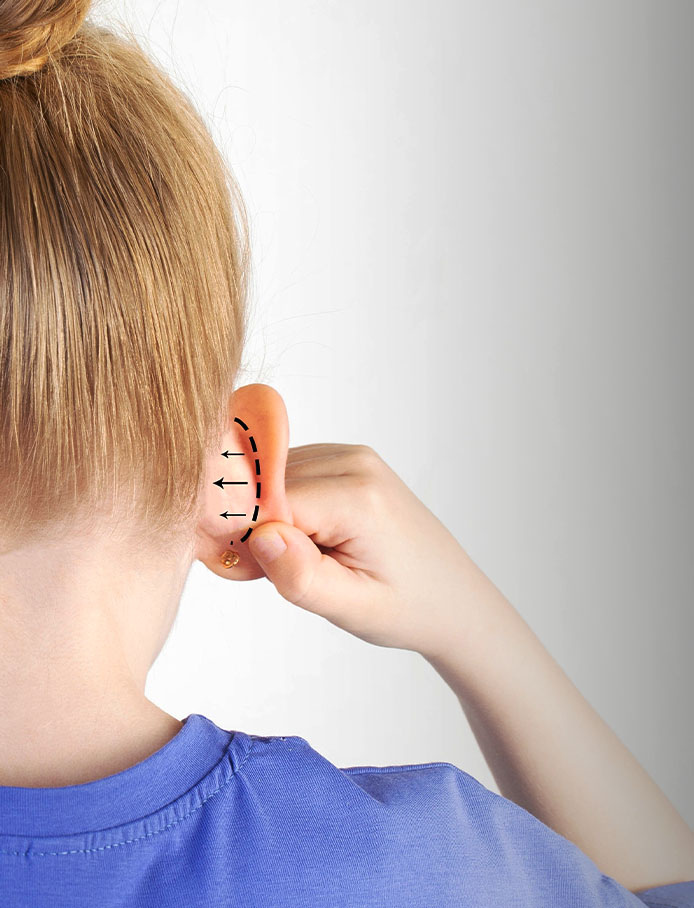
Prominent ears describes outer ears appearing further from the head. This alone does not mean hearing loss or disease. How the person feels and whether they want change matter. In children especially, the issue should not be approached solely through adult aesthetic expectations. Listening to the child’s or adult’s own wishes, concerns and daily experience is fundamental to choosing an appropriate approach.
When should you seek assessment?
Noticeable distance from the head
An underdeveloped ear fold
Personal discomfort about appearance
Prominence may affect one or both ears in different areas. Some people notice it only in photographs, others when tying their hair back. Describe these experiences without assuming the appearance requires treatment. If a child is teased or bullied, this should not be regarded as a problem solved solely through surgery. School and family support also matter. Pain, discharge or hearing problems should be reported independently of cosmetic assessment.
Examination and assessment
Age, cartilage development and ear anatomy are examined. Expectations and access to postoperative care are assessed.
Examination assesses folds, cartilage and the relationship to the head. Age, general health, previous interventions and participation in care are considered. Approaches to infant shape differences may differ from options for older children or adults; discuss timing with a specialist. Learn the goal, realistic degree of change and whether any medical problem is expected without treatment. Decisions should fit individual needs. Let the child participate and ask questions in their own words. If unready, listening to the reasons offers more support than focusing only on appearance.
Treatment options
Otoplasty may be considered at an appropriate age. Early non-surgical moulding options may exist for certain newborn deformities; suitability requires specialist assessment.
Otoplasty may adjust folds and position in suitable people. Identical distance from the head or complete symmetry cannot be guaranteed. Discuss bleeding, infection, scars, suture problems and renewed prominence. A child’s clear objection or lack of readiness should be considered. Do not try home taping or tight compression devices; obtain professional assessment for options appropriate to age and tissue.
Recovery and follow-up
Ear protection and follow-up are planned after surgery. Asymmetry, scarring and renewed prominence are explained.
Individual instructions cover dressings, support bands and protection from injury. Discuss the possibility of pulling or pressure at school and during play. Contact the team for increasing pain, marked one-sided swelling, discharge or unexpected changes. Swelling and dressings may alter the initial appearance. Follow-up considers comfort and return to daily life as well as photographs. Do not neglect the follow-up plan.
Do not describe a child’s ear as a defect or something shameful. Listen to feelings, wishes for change and questions about hospital. A consistent calm, supportive approach from the family helps. If considering surgery, do not promise no pain or that everyone will like them more. Explain that help is available during recovery and discomfort can be reported. Adults’ decisions are also personal choices rather than obligations to fit an ideal. Plan follow-up around work, school, sport and daily equipment. Share medicines and previous healing experiences. If intense appearance concerns persist after treatment, discuss them openly and consider appropriate support.
Frequently asked questions
Must prominent ears always be operated on?
No. Treatment depends on preference and suitability; appearance difference alone makes it neither compulsory nor necessary.
How can I prepare for the consultation?
Note when your symptoms began and any previous tests or procedures. Bring a list of your medicines and any earlier test results you have. You can share your expectations and questions during the consultation.
Does a prominent ear appearance impair a child's hearing?
Appearance alone does not mean hearing loss. Suspected hearing problems need separate assessment. Report concerns about responses to sound, speech or understanding at school. Cosmetic decisions and hearing investigations have different goals and do not replace each other.
What questions should I ask when comparing treatment options?
Ask about the main aim of the proposed approach, which symptoms it is expected to help and which problems it may not change. Find out whether monitoring or a different treatment is an option, and what the possible consequences of waiting are in your situation. If the plan includes a procedure, the preparation, follow-up, return to daily life and service to contact if something unexpected happens should be clear. Stating your most important expectation at the start of the consultation makes it easier to compare options against the same goal. It is natural to ask for an unfamiliar medical term to be explained; the decision should be based on the benefits and limitations described to you, as well as the name of the procedure.
Scientific source and further reading
English translation of the Turkish information summary · Source language: English · Content date: September 2026. This guide does not replace personal medical advice or an examination.


